
The Critical Need for Specialized Neurological Home Care in Dhaka
A cerebrovascular accident (stroke) is a life-altering medical emergency that instantly disrupts motor function, neurological coordination, and independence. When an aging parent or family member suffers a stroke, the immediate hospital crisis is often followed by a complex, long-term challenge: helping the survivor regain voluntary limb movement, postural balance, and daily functional skills.
In a bustling metropolis like Dhaka, transporting a post-stroke survivor with hemiplegia or severe mobility impairment through congested traffic corridors—such as Mirpur Road, Uttara, or Gulshan—to visit an outpatient hospital clinic is intensely grueling. The physical vibrations of transit, coupled with the exhaustion of waiting rooms, frequently exacerbate spasticity and demoralize patients.
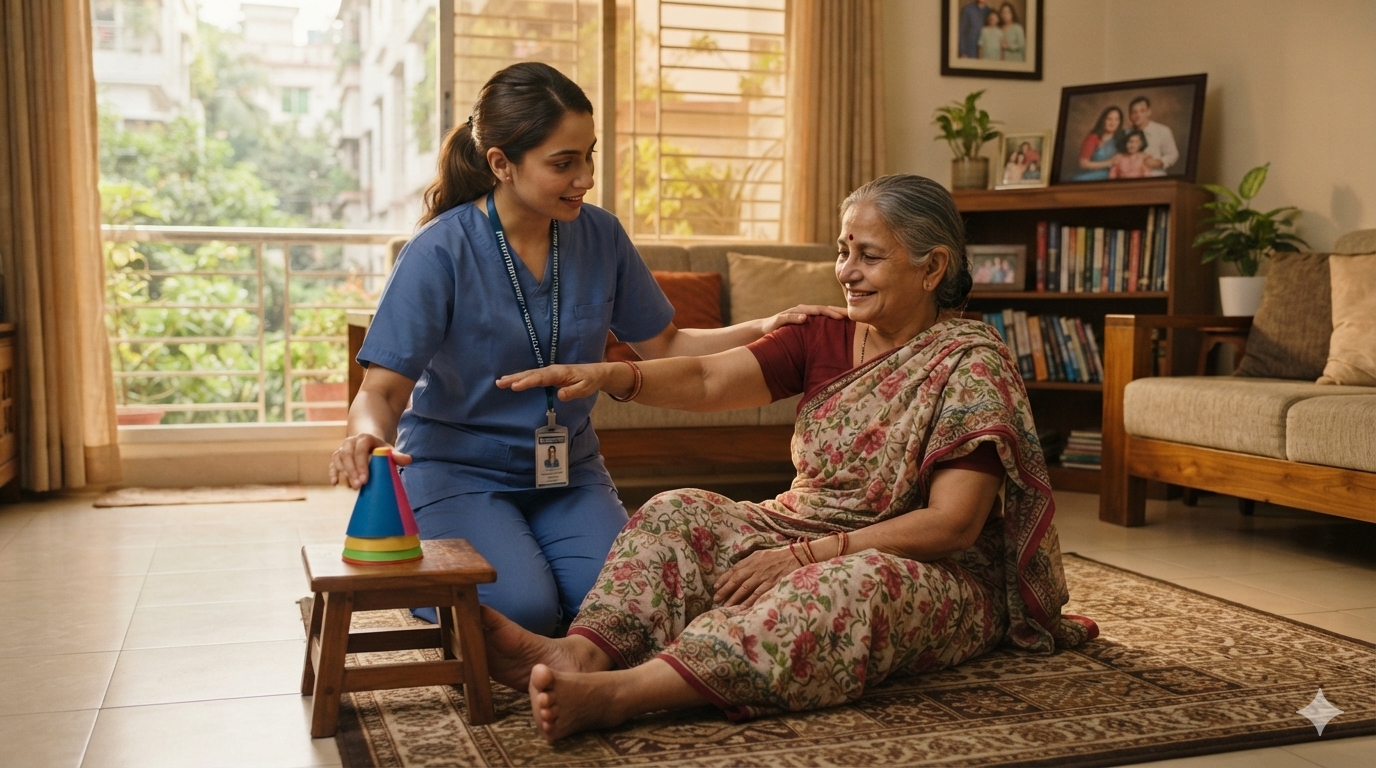
This exact logistical barrier highlights why stroke rehabilitation at home in dhaka has become the gold standard of modern medical recovery. By bringing university-certified BPT and MPT neurological physiotherapists directly to the patient’s residence, families secure structured, continuous, and compassionate paralysis care in a secure, familiar environment.
What is Neurological Physiotherapy at Home and How Does It Work?
Neurological physical therapy is a specialized branch of medicine dedicated to evaluating and treating individuals with central or peripheral nervous system disorders. When delivered as a home-based service, it bridges the gap between acute hospital discharge and independent living.
The Neuroplasticity Framework
The core scientific foundation of stroke recovery is neuroplasticity—the brain’s remarkable capacity to reorganize neural pathways by forming new synaptic connections after injury. To activate neuroplasticity, stroke survivors require intensive, repetitive, and task-specific motor training. Conducting this training inside the patient’s actual living room or bedroom allows therapists to integrate real-world objects (such as dining chairs, bed rails, and hallway floors) directly into functional drills, accelerating recovery speed.
Comprehensive Comparison: Home Stroke Rehabilitation vs. Hospital Clinic Visits
Evaluating where to carry out long-term neuro-rehabilitation reveals profound differences in patient comfort, safety, and clinical progress.
| Evaluation Metric | Stroke Rehabilitation at Home in Dhaka | Traditional Hospital Outpatient Clinic |
|---|---|---|
| Patient Physical Tolerance | Zero Commute Stress: Zero physical shock or fatigue from chaotic city traffic. | Exhausting Transit: Stressful journeys that worsen spasticity and muscle stiffness. |
| Neuroplastic Training Context | Real-World Environment: Exercises practiced on actual home floors, beds, and doorways. | Artificial Clinic Setting: Isolated hospital gymnasiums detached from home layouts. |
| Infection Risk Profile | Safe Domestic Sanctuary: Protected from hospital-acquired pathogens and viral germs. | Elevated Exposure: High risk of encountering airborne pathogens in waiting rooms. |
| Family Caregiver Integration | Active Participation: Family members learn daily handling and stretching routines. | Excluded Environment: Family members are often restricted from treatment areas. |
| Consistency & Adherence | High Compliance: Eliminates travel excuses, ensuring regular, uninterrupted sessions. | High Dropout Rate: Missed appointments due to traffic congestion or bad weather. |
| One-on-One Attention | Dedicated Focus: 45 to 60 minutes of undivided clinical supervision per session. | Fragmented Supervision: Therapists splitting attention across multiple hospital patients. |
Step-by-Step Breakdown of the Stroke Recovery Journey at Home
Recovering motor function after paralysis requires a methodical, phase-by-phase clinical protocol administered by trained BPT/MPT specialists.
Phase 1: Acute Bedside Care & Spasticity Prevention (Weeks 1 to 4)
For patients immobilized by acute hemiplegia, the primary immediate danger is the development of muscle contractures and deep vein thrombosis.
- Clinical Focus: Passive range-of-motion (ROM) stretching, correct bed positioning, and regular limb turning schedules to prevent pressure sores.
- Home Intervention: The therapist gently moves affected joints through complete physiological arcs to maintain soft-tissue extensibility and inhibit abnormal spastic posturing.
Phase 2: Selective Motor Control & Bed Mobility (Weeks 5 to 12)
As initial flaccidity transitions into emerging muscle tone, therapists initiate active-assisted movements.
- Clinical Focus: Core trunk stabilization, rolling over independently, and sitting upright without external back support.
- Home Intervention: PNF (Proprioceptive Neuromuscular Facilitation) patterns, bilateral limb integration drills, and sitting balance exercises on the edge of the bed.
Phase 3: Standing Balance, Weight Bearing & Gait Retraining (Months 3 to 6+)
The final phase focuses on restoring independent standing and walking capabilities.
- Clinical Focus: Weight shifting on the hemiplegic leg, dynamic balance control, and stepping mechanics.
- Home Intervention: Utilizing parallel bars or sturdy hallway walls for assisted walking drills, step-up exercises, and functional obstacle navigation inside the apartment.
The Vital Role of Speech, Swallowing, and Cognitive Integration
Strokes frequently affect language processing (aphasia), swallowing coordination (dysphagia), and cognitive executive function alongside motor paralysis. While physical therapists focus primarily on musculoskeletal movement, comprehensive neurological care requires multidisciplinary coordination:
- Oro-Facial and Respiratory Muscle Control: Strengthening breathing mechanics and swallowing muscles to prevent aspiration risks.
- Bilateral Limb Coordination: Using mirror therapy and rhythmic auditory stimulation to stimulate damaged cortical hemispheres.
- Cognitive-Motor Dual-Tasking: Engaging patients in cognitive naming tasks while executing stepping drills to rebuild neural processing speed.
For broader city-wide neurological care options, you can also review our core guide on physiotherapy home service in dhaka, as well as our targeted regional services such as uttara physiotherapy home service and mirpur care.
How to Verify and Choose a Certified Neurological Physiotherapist
Inviting a medical specialist into your home to treat a stroke survivor requires verifying their professional credentials to ensure safe, evidence-based care.
Essential Verification Steps
- Confirm University Degrees: Ensure the visiting doctor holds an authentic Bachelor of Physiotherapy (BPT) or Master of Physiotherapy (MPT) degree from an accredited medical university. Avoid unverified local massage therapists.
- Examine Clinical Specialization: Verify that the clinician has specific postgraduate training or clinical experience in neurological rehabilitation and stroke motor recovery.
- Check Professional Memberships: Confirm active registration with official regulatory bodies such as the Bangladesh Physiotherapy Association (BPA).
Why Families in Dhaka Trust Physiotherapy Home Service BD
Our specialized division for neurological care and paralysis rehabilitation is built upon uncompromising clinical standards:
- Expert BPT/MPT Clinicians: Highly trained neuro-physiotherapists skilled in advanced motor retraining techniques.
- Comprehensive Mobile Kits: Bringing portable electrotherapy units, therapeutic bands, and balance aids directly to your home.
- Family Empowerment Programs: Equipping caregivers with safe handling skills to maintain continuous daily progress.
10 Frequently Asked Questions (FAQ)
1. How does stroke rehabilitation at home in dhaka accelerate motor recovery?
Providing stroke rehabilitation at home in dhaka allows neuro-physiotherapists to utilize neuroplasticity principles inside the patient’s actual living environment, ensuring consistent daily motor retraining without travel fatigue.
2. Are your visiting neurological physiotherapists university-certified?
Yes, absolutely. Every clinician we dispatch holds an official Bachelor of Physiotherapy (BPT) or Master of Physiotherapy (MPT) degree with specialized training in neurological rehabilitation.
3. What specific paralysis conditions are treated during home sessions?
Our specialists treat hemiplegia, hemiparesis, ischemic and hemorrhagic stroke motor deficits, facial nerve palsy, and post-traumatic brain injury movement limitations.
4. Do family members need to assist during home stroke therapy sessions?
Family members are trained on safe transfer techniques, passive range-of-motion stretching, and supportive exercises to maintain continuous progress between professional visits.
5. How long does a typical home stroke rehabilitation session last?
Standard neurological home sessions range from 45 to 60 minutes of intensive, one-on-one motor retraining and balance therapy.
6. Can home therapy help prevent joint contractures in bedridden stroke patients?
Yes, structured daily positioning and passive stretching performed by our BPT/MPT doctors effectively prevent painful muscle tightening and joint contractures in immobilized limbs.
7. What is the cost of stroke rehabilitation at home across Dhaka?
Per-session costs generally range from BDT 1200 to 2,500, with discounted long-term neuro-rehab packages available for families needing sustained daily support.
8. How quickly can a neurological physiotherapist be dispatched in Dhaka?
With mobile units stationed across major Dhaka zones including Dhanmondi, Gulshan, Uttara, and Mirpur, appointments can usually be arranged within 60 to 90 minutes.
9. Do stroke patients need to travel to a clinic for specialized equipment?
No. Our visiting neurologically trained therapists bring all required portable therapeutic apparatus, resistance bands, and balance aids directly to your home.
10. How do I book stroke rehabilitation services for a relative in Dhaka?
You can contact our clinical hotline or WhatsApp us instantly. Our coordinator will review your relative’s medical status and assign a specialized neuro-physiotherapist promptly.
Conclusion: Empower Your Loved One’s Stroke Recovery Journey Today
Stroke rehabilitation demands patience, consistency, and expert neurological supervision. By bringing professional motor retraining and paralysis care directly to your residence, you protect your family member from travel trauma and unlock the full potential of neuroplastic recovery in a secure environment.
Take the definitive step toward independent living today. Contact Physiotherapy Home Service BD to book your expert neurological home consultation. For broader academic research on global neurorehabilitation standards, you can also consult the World Confederation for Physical Therapy.