
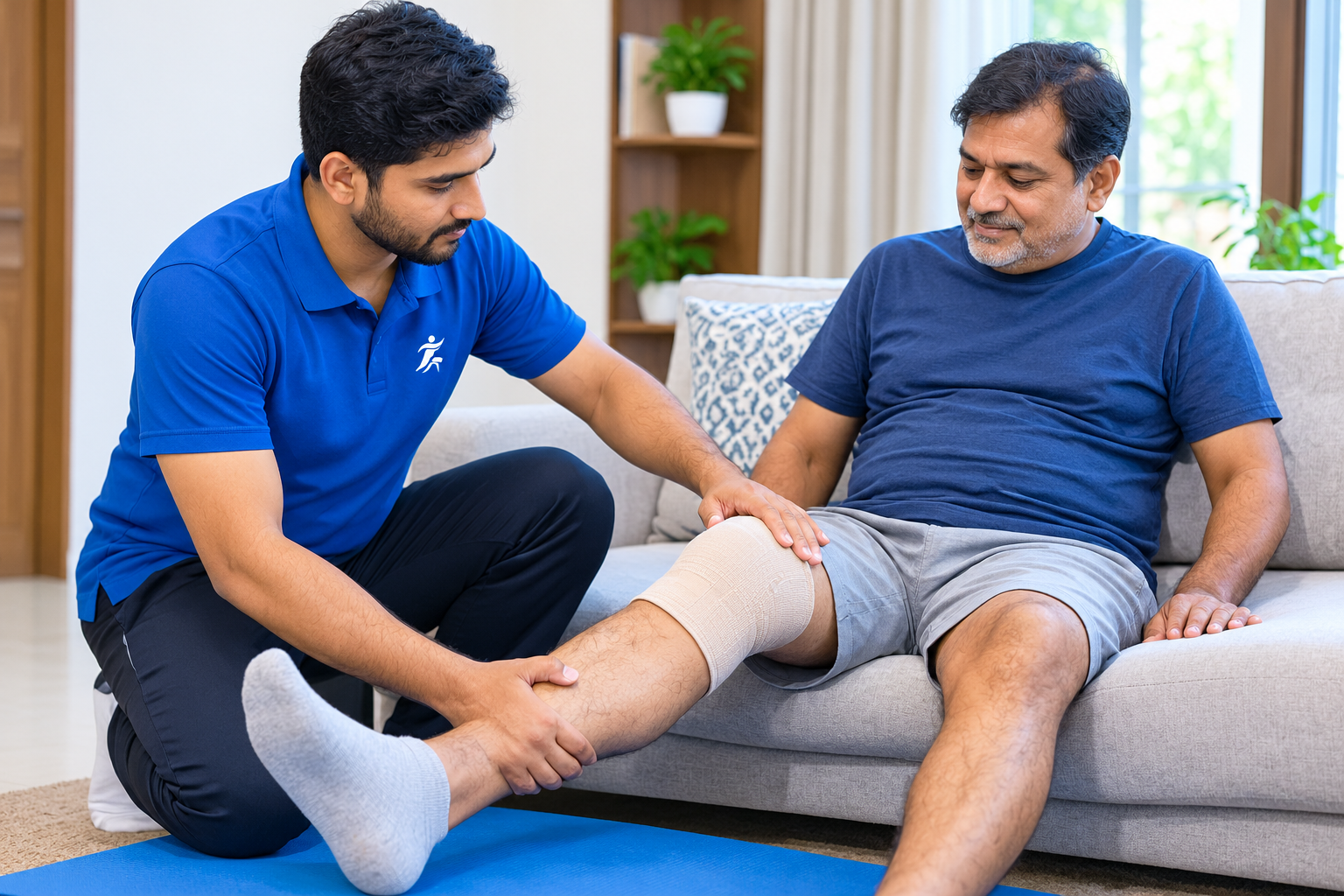
Recovering from knee replacement surgery involves more than the operation itself. Once the surgery is completed, the knee needs time to regain movement, the surrounding muscles need to become stronger, and everyday activities such as walking, standing and using stairs may need to be practised again.Knee replacement physiotherapy in Dhaka can provide structured rehabilitation at home for patients who need support during this process. A physiotherapist can assess current movement and mobility, guide appropriate exercises and adjust the rehabilitation programme as recovery progresses.
What Is Knee Replacement Physiotherapy?
Knee replacement physiotherapy is a rehabilitation process designed to help a patient gradually regain useful movement and function after knee replacement surgery. Treatment can include exercises for knee movement, strengthening, walking practice, balance activities and functional training.
The exact programme depends on the patient’s condition, stage of recovery, strength, mobility and surgical instructions. A physiotherapist may modify exercises as the patient becomes more comfortable and capable of performing daily activities.
If you are recovering from another type of operation, you can also learn about our
post-surgical rehabilitation service in Dhaka.
Why Physiotherapy Is Used After Knee Replacement
Following knee replacement surgery, patients may experience stiffness, weakness, discomfort and difficulty moving around. Rehabilitation provides a structured way to work on these problems while gradually returning to normal activities.
- Improving knee movement
- Building strength in the operated leg
- Practising safe walking
- Improving balance and lower-limb control
- Working on everyday functional movements
- Learning and progressing an appropriate home exercise programme
When Should Physiotherapy Begin After Knee Replacement?
Rehabilitation normally begins around the time of surgery, but the exact timing and activities depend on the patient’s medical condition and the instructions of the surgical team.
Early rehabilitation may involve getting out of bed safely, standing, taking short walks with an appropriate walking aid and performing simple exercises. As recovery continues, treatment can gradually become more focused on strength, mobility, balance and everyday activities.
There is no single recovery timetable that applies to every person. A physiotherapist should determine when an exercise or activity is appropriate based on the patient’s progress.
Stages of Knee Replacement Rehabilitation
Early Mobility
The first stage is generally focused on safe movement. Patients may practise getting in and out of bed, standing and walking with a suitable mobility aid.
Restoring Knee Movement
Once the patient is ready, rehabilitation may include gentle exercises intended to improve knee bending and straightening. The amount of movement should remain within the limits recommended by the healthcare team.
Building Leg Strength
Weakness around the thigh and other muscles of the leg can make walking and standing difficult after surgery. Progressive strengthening exercises may therefore become an important part of rehabilitation.
Returning to Everyday Activities
As mobility improves, physiotherapy can become more functional. This may include practising walking, standing from a chair, using stairs and performing other movements that are important to the patient’s daily routine.
Exercises After Knee Replacement
The exercises prescribed after knee replacement should be selected according to the patient’s stage of recovery. Common rehabilitation activities can include:
Knee Movement
Gentle movements may be used to gradually improve knee bending and straightening.
Muscle Activation
Exercises may help the muscles around the thigh and leg become active again after surgery.
Strengthening
Progressive strengthening can be introduced as the patient’s condition allows.
Walking Practice
Walking exercises can help patients gradually work toward safer and more independent mobility.
Patients should not copy an exercise programme from another person. The right exercises depend on the surgical procedure, current mobility, symptoms and advice from the rehabilitation team.
Walking After Knee Replacement
Walking is an important part of rehabilitation for many knee replacement patients. A walking frame, crutches or another mobility aid may be needed initially.
Physiotherapy can focus on how the patient places weight through the leg, controls the operated knee and uses the walking aid safely. As strength and confidence improve, the level of walking activity can be adjusted.
The aim is not simply to increase walking distance. Safe movement, appropriate technique and the ability to manage everyday activities are also important parts of rehabilitation.
Stair Training After Knee Replacement
Going up and down stairs can be difficult during the early stages of recovery. A physiotherapist can teach the patient an appropriate stair technique based on their strength, balance and mobility aid.
Stair practice should be introduced when the healthcare team considers it appropriate. Patients should not attempt difficult stair exercises without suitable support if they are still unsteady.
Dealing With Stiffness and Swelling
Some stiffness and swelling can occur during recovery from knee replacement surgery. Appropriate movement and exercises may form part of the rehabilitation programme.
However, patients should not force the knee through severe pain or significantly increase exercise without professional guidance. If symptoms become unusually severe, suddenly worsen or cause concern, the surgical or medical team should be contacted.
Knee Replacement Physiotherapy at Home in Dhaka
Travelling to a clinic may be inconvenient for someone who has recently undergone knee replacement surgery. Home physiotherapy provides an option for receiving rehabilitation support in the patient’s own environment.
During a home session, the physiotherapist may work on exercises, walking, balance, functional movement and other activities that are relevant to the patient’s daily routine.
- Assessment of current mobility
- Knee movement exercises
- Progressive strengthening
- Walking practice
- Balance and functional movement
- Home exercise guidance
- Patient and caregiver education
You can learn more about our
home physiotherapy service in Dhaka
if you are considering rehabilitation at home.
Looking for Home Rehabilitation?
Our team can discuss your rehabilitation requirements and help you understand whether home physiotherapy is appropriate for your situation.
What Can a Physiotherapist Assess?
Rehabilitation is not based only on how much pain a patient feels. A physiotherapist may also consider movement, strength, balance and the ability to perform practical activities.
- Knee range of movement
- Strength of the operated leg
- Walking ability
- Balance and stability
- Ability to stand and sit safely
- Use of walking aids
- Progress with prescribed exercises
Knee Replacement Rehabilitation and Daily Activities
Recovery is ultimately connected to everyday life. A patient may want to walk around the house, get up from a chair, use the bathroom independently, prepare meals or manage stairs.
Physiotherapy can therefore include functional movements that relate directly to the patient’s home environment. This can be particularly useful when rehabilitation is provided at home because the therapist can consider the patient’s usual surroundings and daily activities.
When Should You Contact Your Doctor?
Physiotherapy does not replace medical follow-up after surgery. Patients should follow their surgeon’s instructions and contact the appropriate medical professional if they develop symptoms that are concerning or significantly different from what they were told to expect.
Increasing wound redness, unusual discharge, significant worsening swelling, severe pain or fever should be discussed with the medical team.
New significant calf pain or swelling, chest pain or difficulty breathing can require urgent medical assessment.
Medical information: This article is for general educational purposes. It does not replace examination, diagnosis or treatment advice from your surgeon, doctor or physiotherapist.
How to Support Recovery at Home
- Follow the instructions provided by your surgical team.
- Perform prescribed exercises according to professional guidance.
- Use walking aids correctly when they are recommended.
- Increase activity gradually.
- Keep the home environment organized to reduce unnecessary obstacles.
- Ask for assistance with activities that are difficult or unsafe.
- Attend recommended follow-up appointments.
- Tell your healthcare provider about significant changes in symptoms.
Knee Replacement Physiotherapy FAQs
How long does physiotherapy take after knee replacement?
The duration varies between patients. Recovery depends on factors such as strength, knee movement, mobility, symptoms, general health and individual rehabilitation goals.
Can knee replacement physiotherapy be done at home?
Yes, home-based physiotherapy may be suitable for some patients after knee replacement, particularly when travelling is difficult. The physiotherapist can determine which rehabilitation activities are appropriate for the patient’s condition.
What exercises are normally used after knee replacement?
Exercises may include knee movement, muscle activation, strengthening, walking practice, balance work and functional activities. The exact exercises should be selected according to the patient’s recovery stage.
When can I walk normally after knee replacement?
There is no universal timetable. Walking ability develops at different rates depending on the patient’s strength, pain, balance, mobility and recovery.
Can physiotherapy help knee stiffness after surgery?
Physiotherapy may include movement and exercise strategies to improve mobility. Persistent or concerning stiffness should be discussed with the surgical or rehabilitation team.
How can I arrange home physiotherapy in Dhaka?
You can visit our
appointment page
or
contact our team
to discuss your home physiotherapy requirements.
Related Physiotherapy Services
- Post-Surgical Rehabilitation in Dhaka
- Knee Pain Physiotherapy at Home in Dhaka
- Musculoskeletal Physiotherapy in Dhaka
- Home Physiotherapy Service
Book Knee Replacement Physiotherapy at Home in Dhaka
If you or a family member is recovering from knee replacement surgery and needs rehabilitation support at home, you can contact our team to discuss the patient’s current mobility and physiotherapy needs.
Book an Appointment
or
Contact Us
for more information.